Race day needs one toilet per roughly 100 to 150 runners along the course, plus extra units clustered at the start and finish. A 5K with 400 runners typically runs 4 to 6 standard units. Bartlett Porta Pros builds the count around your route map, your aid stations, and your finish line crowd, not a flat guess.
Spread runners out on the map before you count heads. A marathon with rolling wave starts needs fewer units per runner at the start line than a 5K where everyone lines up at once. Standard portable toilets work for most course points, but your finish festival and beer garden crowd should get deluxe flushable units if the budget allows. OSHA 1926.51(c) sets construction ratios of one toilet per 20 workers, and while a public road race is not a job site, race directors in Bartlett use it as a sane floor when local permit offices ask for a plan. Under ADA Standards section 213.2, at least 5 percent of any cluster of single-user units must be accessible, with a minimum of one, so put an ADA accessible porta potty at the start, the finish, and any mid-course medical tent. Aid stations near mile markers need at least one unit each; runners will not backtrack for a bathroom. If your course loops near Lakeland, 6.4 miles east of Bartlett, or crosses into Germantown, 13.1 miles south, coordinate unit counts with Service Areas so nothing gets double-booked on the same weekend.
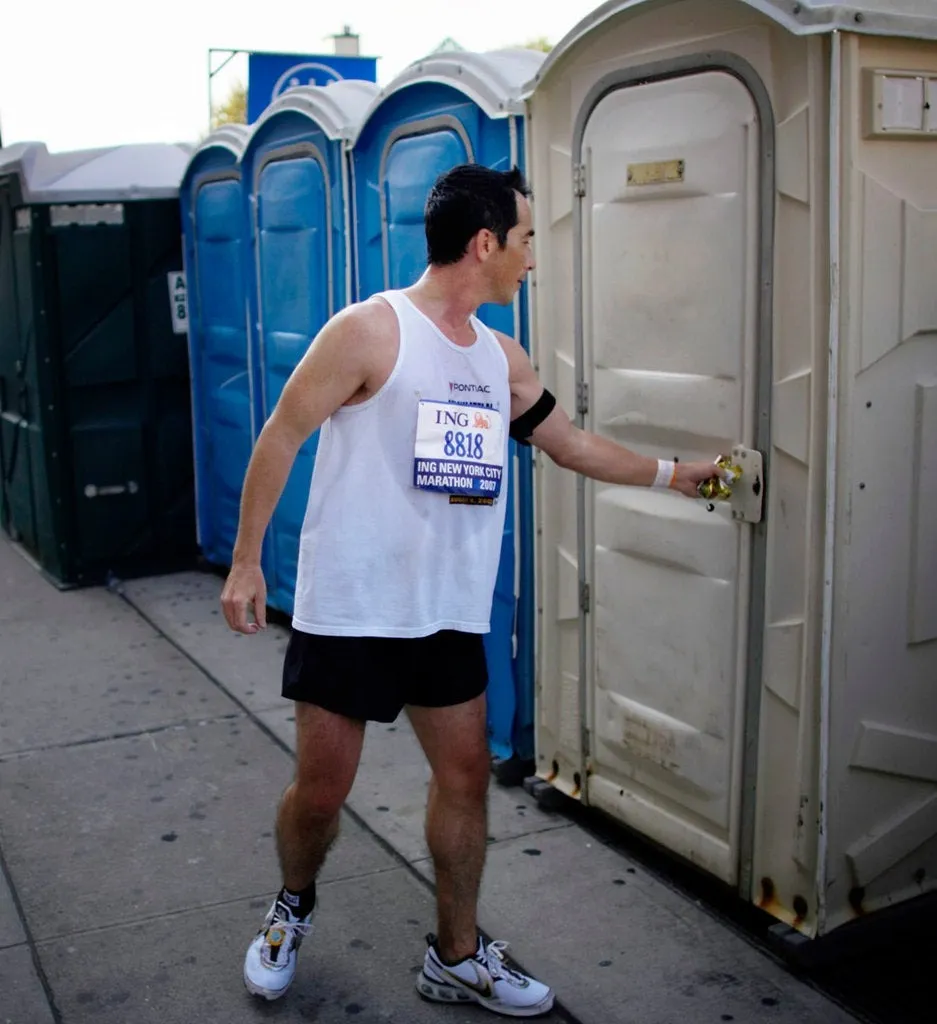
Race weekends run Friday drop-off through Sunday pickup on most course layouts, which puts them closer to a weekend rate than a single day rental. Budget delivery separately; most race organizers pay a flat delivery fee on top of the unit rate, and that fee usually runs higher on a weekend than a weekday because of the extra staffing.
| unit | day | week | weekend |
|---|---|---|---|
| standard | 100-350 | 130-500 | 125-400 |
| ada | 200-400 | 120-240 | 199-300 |
| deluxe | 85-1200 | 150-290 | -- |
A standard unit rented for the weekend typically lands in the 125 to 400 range, well above a single weekday but still below a full week's rate. If your event needs a bank of units, ask about porta potty rental per day pricing versus the weekend block, since a Saturday-only fun run sometimes costs less delivered as a single day plus pickup than a full weekend hold. Larger races with a beer tent or VIP area often add a restroom trailer rental, and a 4 stall restroom trailer handles a finish line crowd better than a row of standalone units when lines get long fast.
Timing tents, PA systems, and finish line arches all need power, and that usually means a temporary power pole run from a generator or a tapped service. Bracing matters because race weekends bring wind, foot traffic, and cable pulls that can rock a pole loose. Set the pole plumb in a base that resists lateral pull, run guy lines or a braced frame on at least two sides facing the crowd flow, and keep the cable run clear of the route so runners do not trip a line loose mid-race. GFCI protection under OSHA 1926.404(b)(1)(ii) belongs on every circuit feeding timing equipment near a wet finish line spray station. Pair the power pole with a light tower rental if your race starts before sunrise, which is common for summer events avoiding Bartlett heat. Keep the pole and its guy lines outside the barricade line; ANSI D6.1 barricades under OSHA 1926.202 keep spectators back from both the course and the equipment.
Handwashing matters as much as toilets on a race course. Pair each toilet cluster with a handwashing station rental, since 29 CFR 1910.141(d)(2) requires soap and towels or a hand-drying device at wash stations, not sanitizer alone. Runners handling energy gels and sports drinks at aid stations appreciate a portable sink rental more than a sanitizer stand. For post-race cleanup, especially with food trucks on site, a roll-off dumpster rental keeps the finish festival from turning into a trash pile, and a 10 yard dumpster rental usually covers a single-day race footprint.
Placement drives everything. Keep units at least 60 feet clear behind any roll-off delivery truck, since that is the standard straight clearance a delivery driver needs to back in and drop safely. Route your restroom map the way you would a runner's route: near turns, near aid stations, never blocking the accessible path. The porta potty placement guide covers ground stability and slope, both of which matter on Bartlett's parks and greenway courses where turf can be soft after rain.
Book as soon as your course map and runner count are set, ideally 60 to 90 days out for races over 500 runners. Smaller local fun runs can book closer in, but weekend slots fill fast during spring and fall race season. Confirm your final count two weeks before race day.
Placement in the public right of way needs confirming with the city; check with Bartlett's permitting office before finalizing your course map. See porta potty permit requirements for what to ask.
Yes. Multi-day races and festivals can schedule a mid-event service visit so units stay usable through the whole weekend. ANSI/PSAI Z4.3 sets a baseline of one service per week for moderate use, but high-traffic race weekends often need a same-day extra visit.
An 8 stall restroom trailer handles most finish line crowds over 1,000 spectators, while a 2 stall restroom trailer suits a smaller local race with a tight footprint and limited parking for delivery.
Yes. ADA Standards section 213.2 applies regardless of race distance whenever units are clustered, so a 5K start line needs the same one-unit minimum as a marathon. See ADA restroom requirements for the full placement rules.
Yes. Bartlett Porta Pros delivers marathon and race restrooms across Bartlett and the surrounding metro, with same-day and next-day drop-off available on most orders.
Pricing depends on the unit and how long you need it. See our cost breakdown and request a free quote for an exact figure.
Standard rentals include scheduled service — a pump-out, a clean, a restock and fresh deodorizer. Busy or hot-weather sites can be serviced more often.
Call now or request a free quote — clean units, on-time delivery, transparent pricing.